














Source: “Case for the Defense”
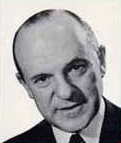
Wikipedia: “Victor Mollo (St Petersburg 17 September 1909 – London 24 September 1987) was a British contract bridge player, journalist and author. He is most famous for his “Menagerie” series of bridge books, depicting vivid caricatures of players with animal names and mannerisms through a series of exciting and entertaining deals—bridge fables of a sort. Mollo attended Cordwalles School but neglected his studies and devoted himself to bridge. As an editor in the European service of the British Broadcasting Corporation, he began to write books and articles on the game. After retirement in 1969, Mollo started to write even more extensively, and up to his death in 1987 he wrote 30 books and hundreds of articles. He was also active in developing bridge cruises, mostly in the Mediterranean.
Dealer South. Neither VUL
| West | North | East | South |
| Pass | |||
| Pass | 1 |
Pass | 1 |
| Pass | 1 |
Pass | 3 |
| Pass | 4 |
Pass | Pass |
| Pass |
Contract: 4
West leads A, them theK. Declarer follows with7 and the J. At trick three West plays the10, taken with theA.
Declarer now leadsA and the9 to East’sK west playing the4 and the 3. Five tricks have been played and defenders have won three of them.
| K Q 10 5A 99 6 2A J 5 4 |
|
| J 9 8K J10 8 5 4 3K Q 7 |
Which card should East play at trick six?
Answer:
A diamond.
West’s sequence, theA first, them theK, is the conventional method of showing a doubleton, so East knows that his partner has no more of the suit.
But has he a trump?
Yes.
By playing the4 before the3, West signals three trumps. That again is conventional. Contrary to the practice in the other suits, high-low in trumps shows three and usually indicates a desire to ruff.
| K Q 10 5A 99 6 2A J 5 4 |
||
| 7 4 35 4 3A K10 9 8 6 4 |
J 9 8K J10 8 5 4 3K Q 7 |
|
| A 6 2Q 10 8 7 6 2Q J 73 |